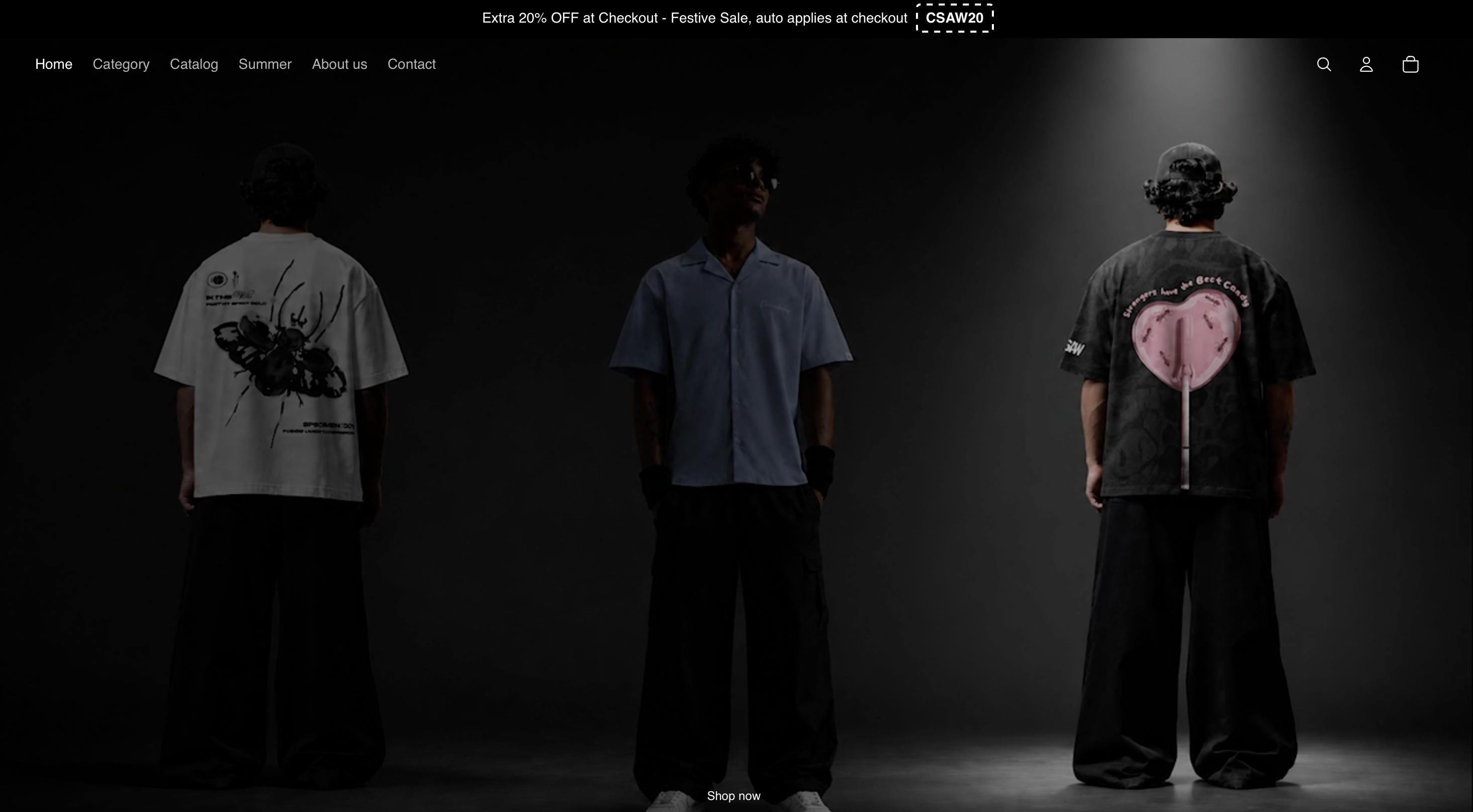
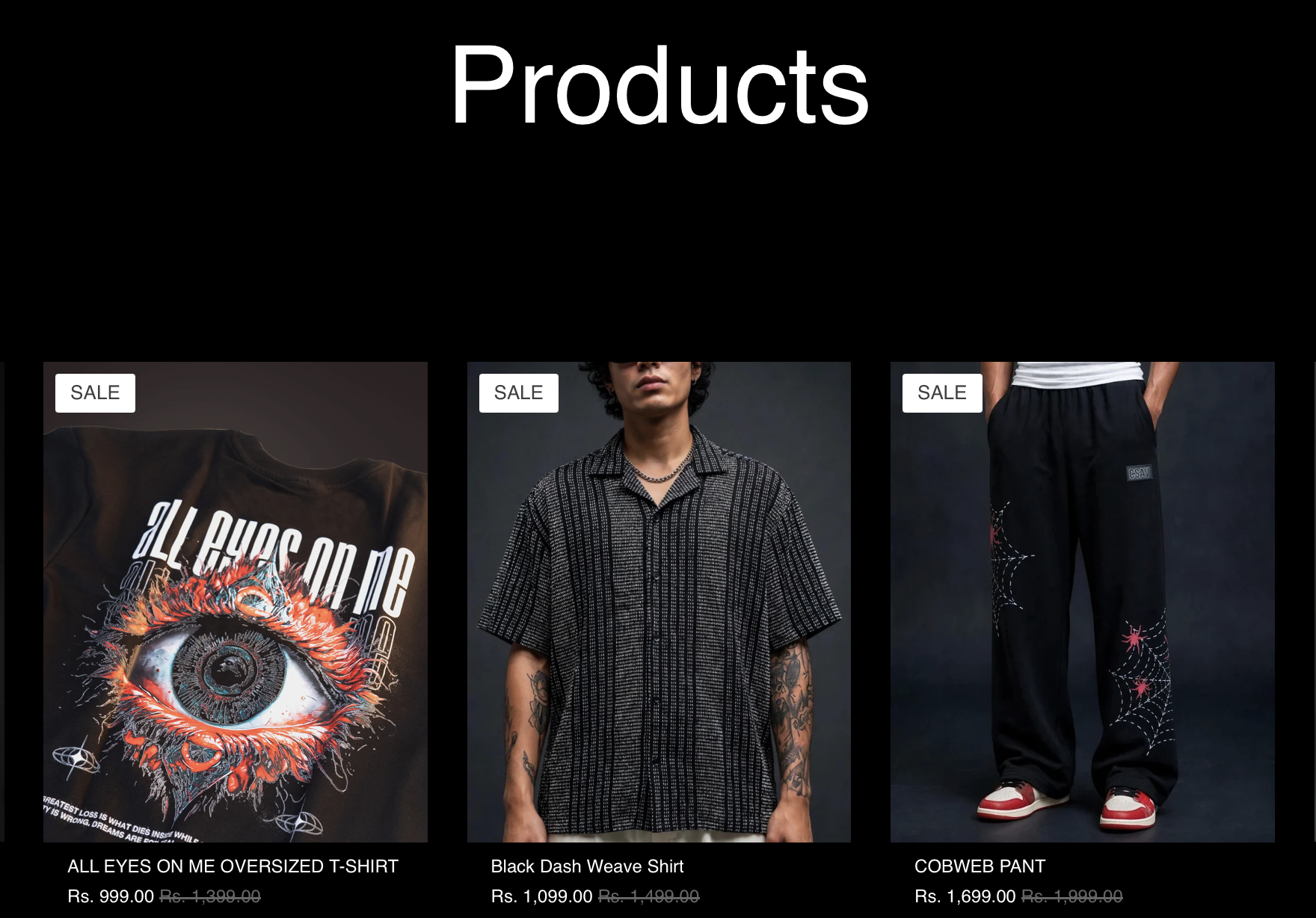
E-commerce and product-line presentation for a concept-driven streetwear label
Overview
CSAW sells streetwear — oversized tees (the Specimen series), graphic tees with conceptual names, shorts, pants, and basics running ₹699–2,799 — built around a wordplay concept baked right into the name: "seesaw." The brand's pitch, "Streetwear That Swings Both Ways," turns that into a whole philosophy — "Life's a seesaw — we made it a movement," clothing for people navigating life's highs and lows rather than picking one mood and staying there.
The Challenge
A clever concept like "seesaw" is either the sharpest thing about a streetwear brand or the thing that quietly disappears the moment someone starts actually browsing. The real test isn't whether the tagline lands on the homepage — it's whether "swinging both ways" shows up anywhere past it, in how products are actually named and organized, or whether it collapses into a standard Hoodies / Bottoms / T-shirts grid that's indistinguishable from every other streetwear store running the same layout. Streetwear is full of brands with one good line on their About page and nothing underneath it carrying the idea through. That's the specific risk a concept this good creates for itself.
Our Approach
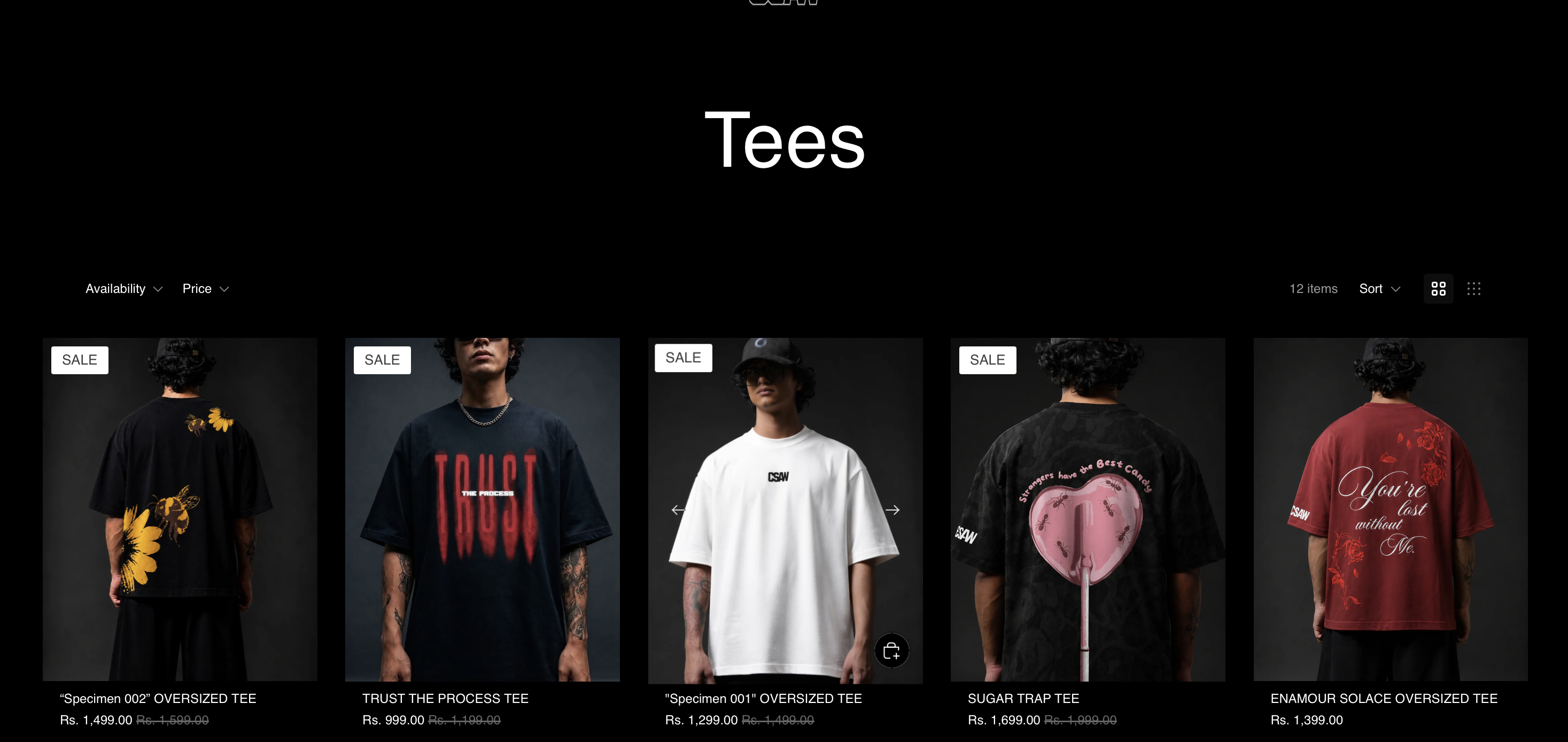
The build's job was making sure the seesaw concept lived in specifics, not just the tagline. Product naming does the real work — "Sugar Trap" and "Trust the Process" sit at opposite ends of the exact duality the brand is named for: indulgence against discipline, risk against grind. That's not a coincidence a shopper stumbles into, it's the "swings both ways" idea showing up in something they'll actually read while shopping, not just something they skimmed once on the homepage. "FORM. FIT. FABRIC" and "QUALITY OVER EVERYTHING" are positioned as an operating philosophy rather than a slogan, backing an "instant classics" narrative that argues against the trend-chasing, drop-culture churn most of the category runs on — timeless pieces, not hype-cycle ones. Underneath that, the shopping experience itself stays straightforward: clear categorical organization plus seasonal collections, so the personality lives in what a product is called and what it stands for, not in a confusing structure layered on top of it.
The Result
Same honest framing as the rest of this set: no stat or client quote on file yet, so this stays about what changed on the site rather than a number that isn't there. What's real is that CSAW's central idea now shows up in the product catalog itself, not just the brand statement — a shopper encountering "Sugar Trap" next to "Trust the Process" is getting the seesaw concept whether they read the About page or not. Whether that's moved actual sales or repeat purchase behavior is something to get from CSAW directly.