Brand identity and e-commerce platform for a premium kids' fashion label
Overview
Bobochi sells everyday wear for kids aged 4–10 — t-shirts and sweatshirts in soft, considered colorways, built on the idea that children's clothing should feel as good as it looks. BE YOUR OWN partnered with Bobochi on both halves of the business at once: the identity itself, and the storefront that has to carry that identity into an actual sale.
The Challenge
The kids' fashion category doesn't have a shortage of clothes. It has a shortage of brands that say anything distinct about themselves. Scroll through any marketplace or Instagram feed selling kidswear in this price range and the labels blur together — similar palettes, similar product photography, similar promises about comfort and quality that every competitor is also making. Bobochi's problem wasn't product quality; the clothes were already good. It was that nothing about the brand had been defined clearly enough to give a parent a reason to remember it, let alone choose it twice. A category where everyone looks interchangeable doesn't reward the best product — it rewards whoever manages to look like a decision instead of one more option in the scroll.
Our Approach
The strategy started from a fact most kidswear branding ignores: a child doesn't choose the brand, a parent does. Every decision that followed came out of that one distinction. Rather than build an identity aimed directly at a four-year-old — loud colors, cartoon energy, the crowded category default — BE YOUR OWN built Bobochi around what actually earns a parent's trust before they buy: a considered, premium tone that reads as care rather than novelty.
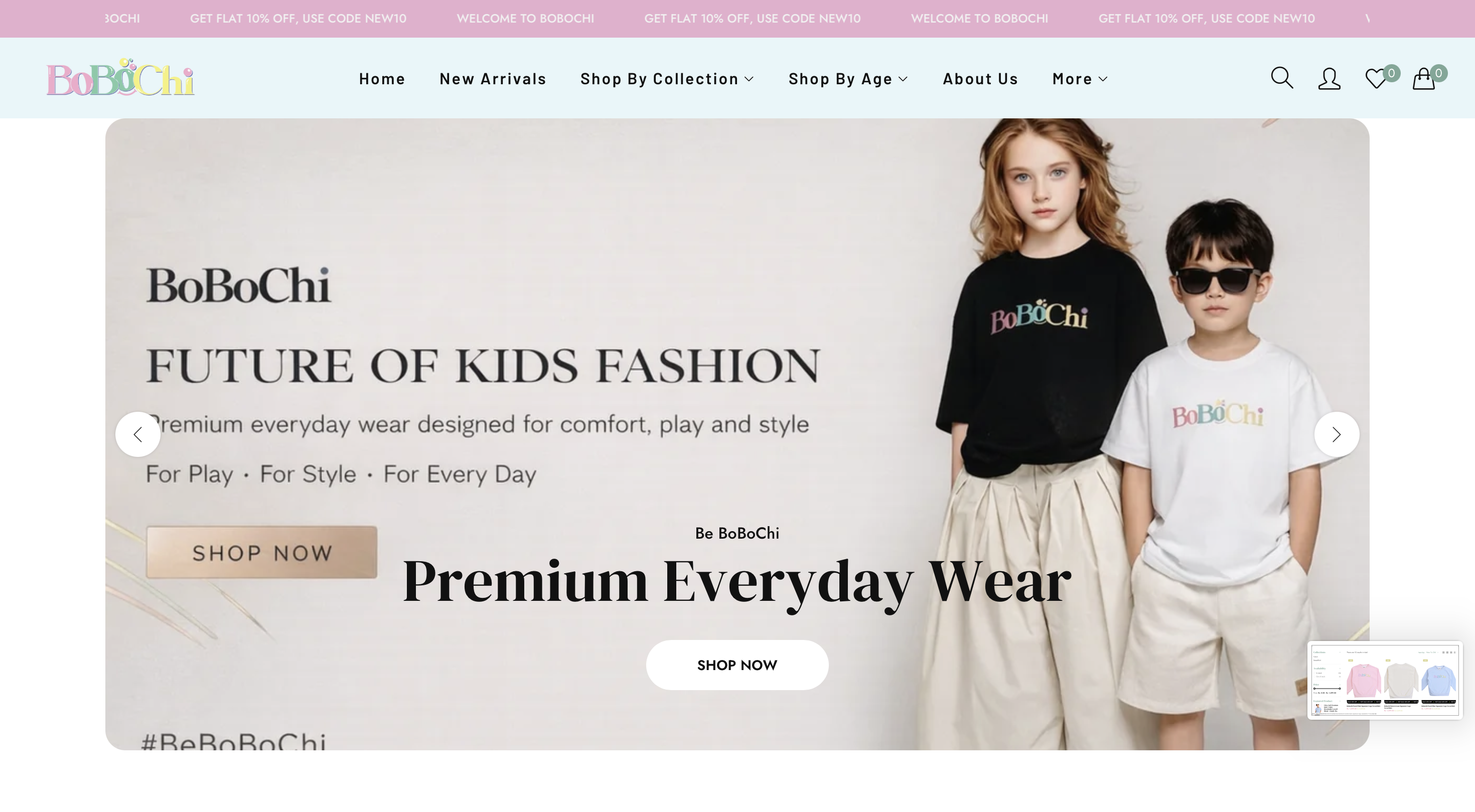
That shows up first in the identity itself: a multicolor pastel wordmark — "BoBoChi," each letter its own soft tone, with a small bubble accent over the second "o" — set against a restrained, dusty palette of sky, pink, mint, and buttercream. It's playful without tipping into juvenile, which is a harder needle to thread than it sounds; most kidswear brands land firmly on one side or the other. A tagline system carries the same idea through the copy — "Future of Kids Fashion," "Premium everyday wear designed for comfort, play and style" — consistent enough that it doubles as its own hashtag, #BeBoBoChi.
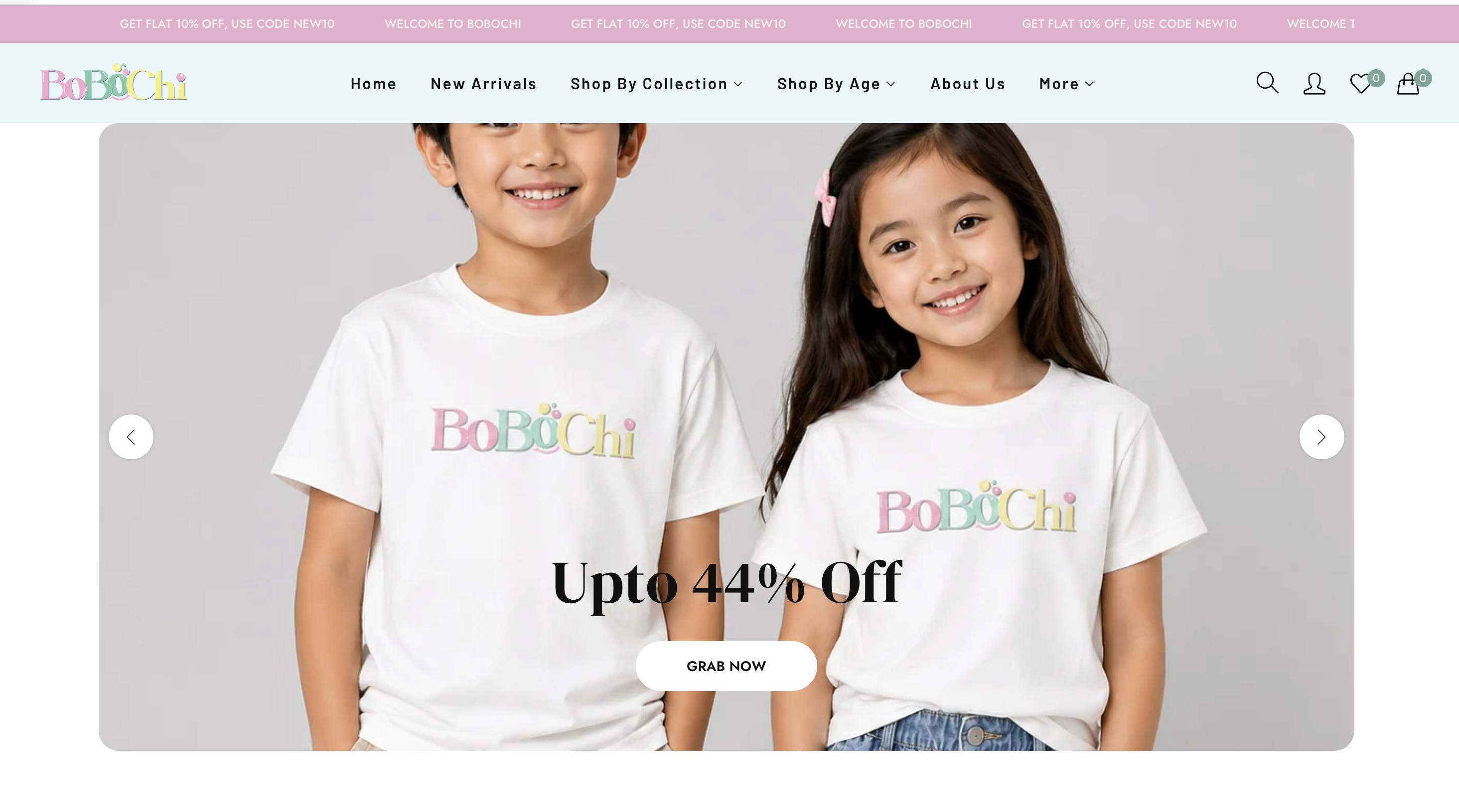
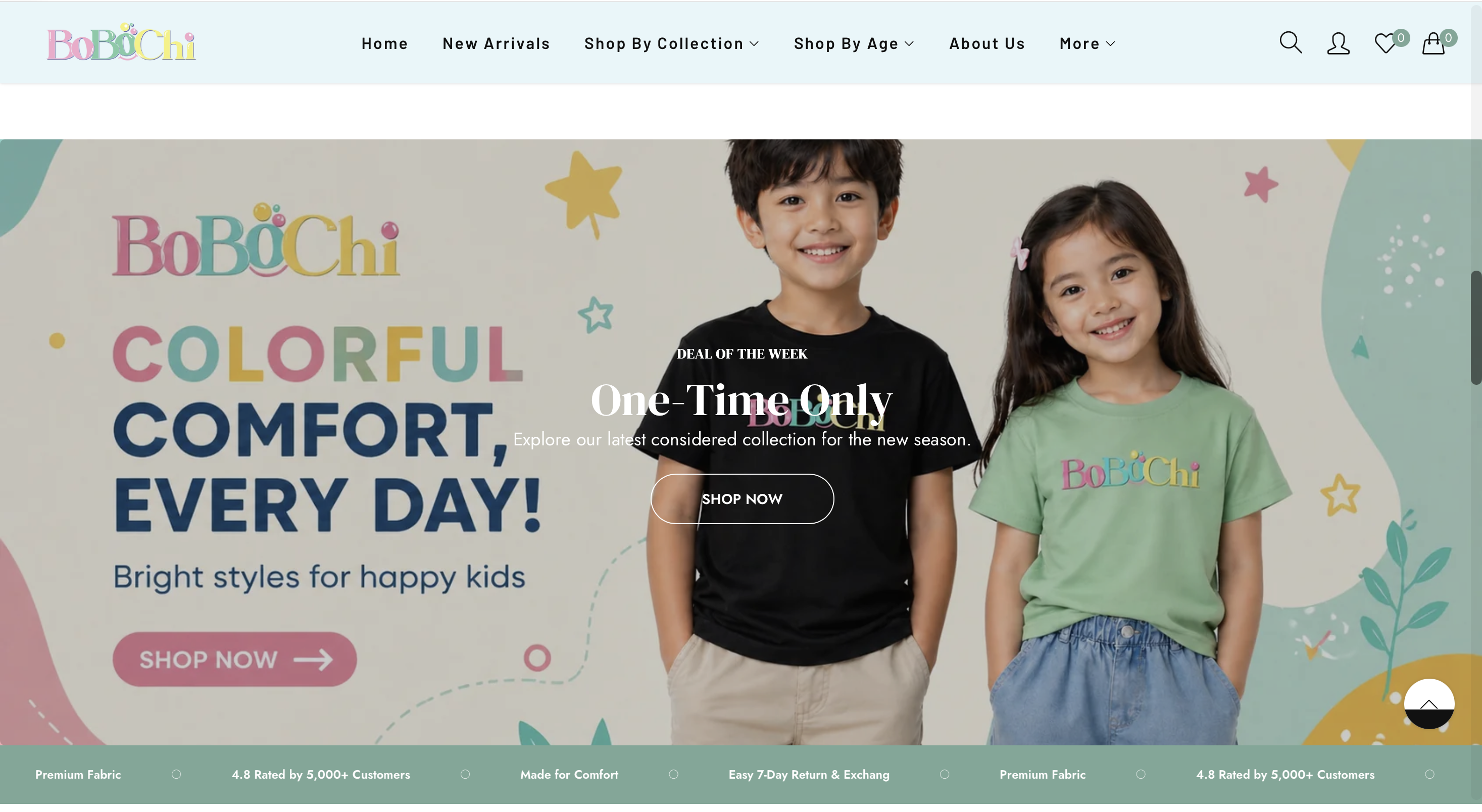
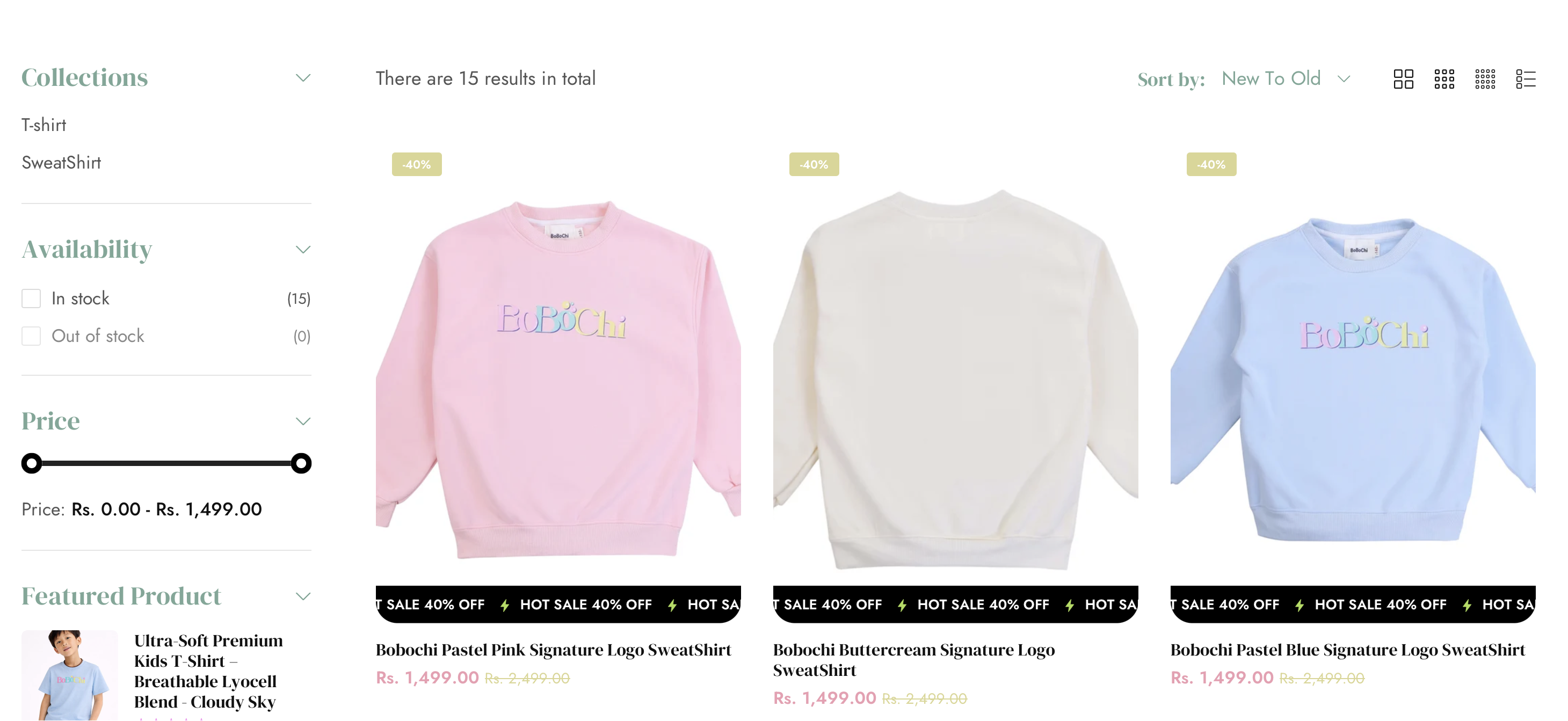
The website carries the logic forward, built around how a parent actually shops rather than how a catalogue happens to be organized. "Shop By Age" sits in the main navigation alongside "Shop By Collection," because fit and age come before style in a parent's actual decision-making. The product listing page backs that up with real merchandising depth — collection, availability, and price filters, a featured-product upsell in the sidebar, grid and list view toggles — the kind of functional maturity that signals a serious retailer rather than a hobby store. And running under the hero, a trust-signal strip does the specific work a newer D2C brand needs most: premium fabric, a 4.8-rating-from-5,000+-customers claim, easy 7-day returns. None of that is decoration — it's the exact reassurance a parent needs before trusting an unfamiliar label with their kid's wardrobe.
The Result
Bobochi came to BE YOUR OWN needing to find its voice in a market that had given it none. What it left with was a brand built around the actual buyer, not just the eventual wearer — and since launch, that shift has translated into roughly 3x growth. Not from shouting louder in an already crowded category, but from finally being the option that reads like a decision instead of one more name in the feed.